What each water resistance rating means, and why 30 metres is not 30 metres
The number on the caseback is not a depth. It is a laboratory pressure, applied to a motionless watch for a few minutes. Nearly all the confusion starts there. This is the real equivalence, with the ISO standards up front.
Machine translation pending human review. Figures and sources match the original.
A watch marked 30 metres is not designed to go down to 30 metres. According to the usual table of markings, 30 m or 3 bar covers daily wear, splashes and rain, not showering or swimming. The Casio F-91W, which carries that marking, is the classic example.
Every 10 metres of marking equals 1 bar. What gets measured is static pressure in a machine, not a person moving an arm under a shower, with hot water and soap involved. There are two standards: ISO 22810 for water-resistant watches in general and ISO 6425 for dive watches. They are paid documents we have not been able to read directly; what follows comes from public summaries of both, and from what the brands say.
The practical table
| Marking | Use allowed in the usual ISO table | Casio's caveat |
|---|---|---|
| 30 m / 3 bar | Rain and splashes. No showering or swimming | |
| 50 m / 5 bar | Shower, bathing and surface swimming, no diving | Light rain and hand washing; may not withstand a strong shower |
| 100 m / 10 bar | Swimming, snorkelling, water sports | Splashes, swimming and water activities |
| 200 m / 20 bar | Marine activity and free diving | Water sports; not for extended scuba diving |
| Diver's 100 m or more | Scuba diving, under ISO 6425 | A dedicated line, such as the Frogman |
| Diver's 300 m or more, mixed gas | Saturation diving |
The gap in the second row is no small detail: at 5 bar, one source allows gentle swimming while a maker of inexpensive watches talks about hand washing. Casio's own pages do not always agree with each other on 20 bar. When in doubt the watch's manual wins, not this article or any general table.
Why a dive watch is something else
A watch can withstand a lot of pressure and still not be a dive watch. ISO 6425 requires, according to its public summary, a minimum of 100 metres and a series of tests a city watch does not pass: 50 hours submerged at about 30 cm, alternating immersions at 40, 5 and 40 degrees, and a 125% overpressure for two hours. That margin is no whim: it covers dynamic peaks, salt water, which is 2% to 5% denser, and gasket ageing.
Rated pressure and actual test pressure in a dive watch
In bar. The ISO 6425 test applies 125% of the rated pressure, according to the public summary of the standard. Conversion is ours: 10 m equals 1 bar. We have not consulted the paid text of the standard.
- Marked pressure
- Test pressure
View data as table
| Series | X axis | Value |
|---|---|---|
| Marked pressure | 100 m | 10 |
| Marked pressure | 200 m | 20 |
| Marked pressure | 300 m | 30 |
| Marked pressure | 600 m | 60 |
| Marked pressure | 1,000 m | 100 |
| Test pressure | 100 m | 12.5 |
| Test pressure | 200 m | 25 |
| Test pressure | 300 m | 37.5 |
| Test pressure | 600 m | 75 |
| Test pressure | 1,000 m | 125 |
Source: en.wikipedia.org
The rule shows in extreme watches: the Deepsea, rated to 3,900 m, is tested at 4,875 m, and the Deepsea Challenge, rated to 11,000 m, at 13,750 m. Exactly 125%.
Watches for saturation diving add another test: pressurised gas for 15 days, and they leave the factory with the mixed-gas diving inscription.
The normal and the absurd, on a single scale
Stated water resistance of eleven real watches
In metres. F-91W, Sea-Dweller, Deepsea and Deepsea Challenge: Wikipedia. Oyster Perpetual 41: aBlogtoWatch. Submariner, Moonwatch, Seamaster Diver 300M, Planet Ocean, Ploprof and Ultra Deep: our Archive records and Wikipedia. Luxury watches are not always the most water-resistant, and none of these figures is a recommendation for use.
View data as table
| Series | X axis | Value |
|---|---|---|
| Water resistance (m) | Casio F-91W | 30 |
| Water resistance (m) | Omega Moonwatch | 50 |
| Water resistance (m) | Rolex OP 41 | 100 |
| Water resistance (m) | Rolex Submariner | 300 |
| Water resistance (m) | Omega Diver 300M | 300 |
| Water resistance (m) | Omega Planet Ocean | 600 |
| Water resistance (m) | Omega Ploprof | 1200 |
| Water resistance (m) | Rolex Sea-Dweller | 1220 |
| Water resistance (m) | Rolex Deepsea | 3900 |
| Water resistance (m) | Omega Ultra Deep | 6000 |
| Water resistance (m) | Rolex Deepsea Challenge | 11000 |
Source: en.wikipedia.org
Note the second figure: the Speedmaster Moonwatch, the watch that went to the Moon, is rated to 50 metres. Less than many sports watches that will never leave an office. Nor is that a flaw, because it is a chronograph, not a dive watch.
What to do with all this
- For true daily wear, 100 metres is the comfortable figure. It is what lets you swim with a watch without a second thought, according to both the usual table and Casio. This is our advice, not a standard.
- A water resistance rating expires. Gaskets age, as the very logic of the ISO 6425 margin recognises. An old watch engraved "300 m" does not guarantee 300 m today.
- Check whether it says "Diver's". A high figure does not make a watch a diving instrument; the standardised inscription does signal a specific test.
Two curiosities to finish. The Nautilus of 1976 already advertised 120 metres, more than double a current Moonwatch. And three prototypes of Omega's Ultra Deep survived a 10,928-metre dive into the Mariana Trench in 2019, although that family's rating stops at 6,000.
 F-91WCasio
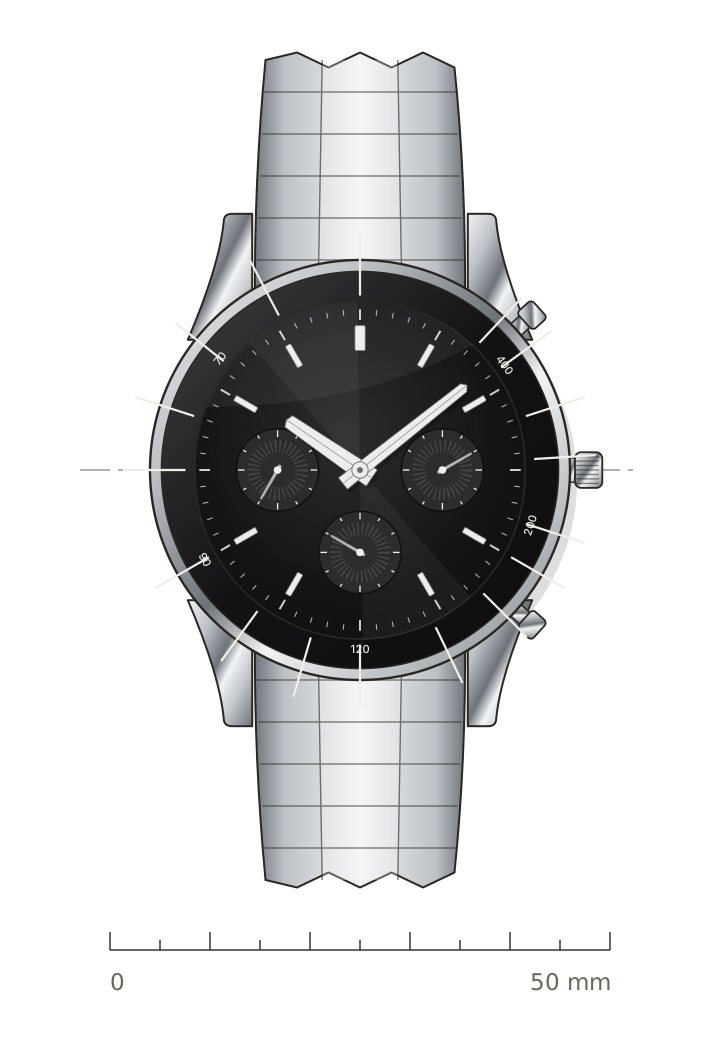 Speedmaster Moonwatch Professional (zafiro)Omega
 SubmarinerRolex
 Seamaster Diver 300MOmega
 Rolex DeepseaRolex
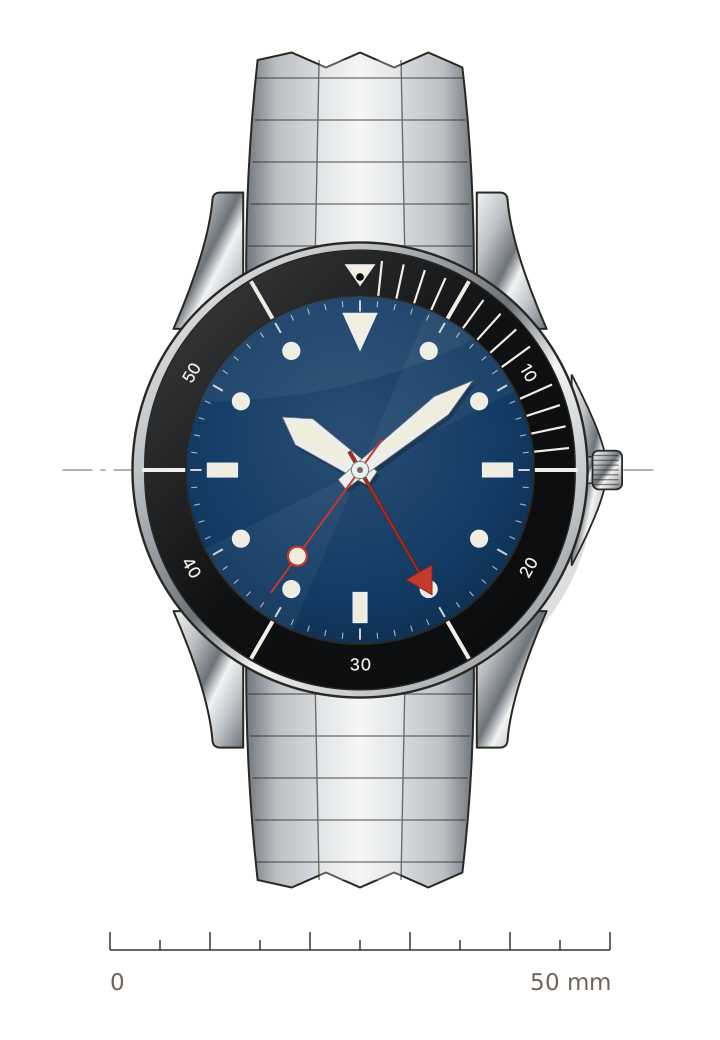 Seamaster Planet Ocean 6000M Ultra DeepOmega
Sources
- Water Resistant mark and ISO 6425 (Wikipedia) en.wikipedia.org
- Rolex Sea-Dweller (Wikipedia) en.wikipedia.org
- Omega Seamaster (Wikipedia) en.wikipedia.org
- Casio Europe: water-resistant watch guide (extract only) casio.com
- Casio US: water-resistant watches (extract only) casio.com
- Casio international: water-resistant watches (extract only) casio.com
- Casio F-91W (Wikipedia) en.wikipedia.org
- Omega Speedmaster Moonwatch (official record) omegawatches.com
- Hands-on Oyster Perpetual 41 134303 (aBlogtoWatch) ablogtowatch.com
- The integrated bracelet sports watch story (Revolution) revolutionwatch.com